Sudden Cardiac Arrest & Cardiopulmonary Resuscitation

This section on Sudden Cardiac Arrest and Resuscitation delves into the many aspects of sudden cardiac arrest. It is a comprehensive resource aimed at clinicians, from paramedics to in-hospital personnel. It covers the pathophysiology, clinical context, and treatments involved in resuscitation, complete with self-assessment tests for each topic explored.

Search chapters

Sudden cardiac arrest and resuscitation

Introduction to cardiac arrest

Hearts too good to die In 1961 the Journal of the American Medical Association (JAMA) published an article titled Hearts too good to die (JAMA,

Sudden cardiac arrest and resuscitation

Epidemiological aspects of cardiac arrest

Data sources for monitoring cardiac arrest and resuscitation There are currently several large registries monitoring resuscitation practices. Some data sources also monitor sudden cardiac arrest.

Sudden cardiac arrest and resuscitation

The chain of survival in sudden cardiac arrest

Time is the most critical factor for survival in cardiac arrest. Life-saving interventions must be initiated momentarily to maximize the probability of survival. Several actions

Sudden cardiac arrest and resuscitation

The 3-phase model of sudden cardiac arrest

The course from sudden cardiac arrest (SCA) to death follows a pathophysiological process that affects the effectiveness of the interventions. Numerous studies demonstrate that the

Sudden cardiac arrest and resuscitation

The physiology of cardiopulmonary resuscitation (CPR)

The forces that drive coronary and cerebral perfusion, and ventilation of the lungs during cardiopulmonary resuscitation (CPR) differ substantially from normal circumstances. The purpose of

Sudden cardiac arrest and resuscitation

Risk factors for sudden cardiac arrest

Predicting sudden cardiac arrest The purpose of discovering and measuring risk factors is to obtain estimates of risk, tailor management according to the risk and

Sudden cardiac arrest and resuscitation

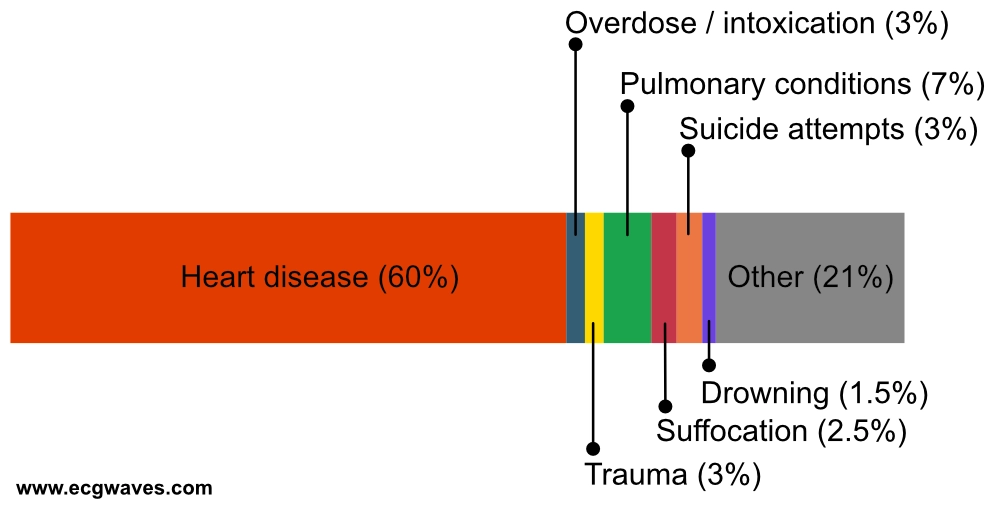
Causes of sudden cardiac arrest

It is commonly stated that approximately 80% of all cardiac arrests are caused by acute or chronic coronary artery disease, with the latter being the

Sudden cardiac arrest and resuscitation

Basic Life Support (BLS) in cardiac arrest

Basic life support (BLS) can be provided by anyone, including laypeople. As shown in Table 1, BLS is an exceptionally effective treatment, with a very

Sudden cardiac arrest and resuscitation

Arrhythmias before and during cardiac arrest

Cardiac arrest is a result of tachyarrhythmia, bradyarrhythmia or asystole. The tachyarrhythmias include ventricular fibrillation (VF) and pulseless ventricular tachycardia (VT). The bradyarrhythmias include all

Sudden cardiac arrest and resuscitation

Care after return of spontaneous circulation (ROSC)

Post-resuscitation care Victims of out-of-hospital cardiac arrest (OHCA) who achieve ROSC in the emergency room (ER) are transferred to the intensive care unit (ICU), coronary

Sudden cardiac arrest and resuscitation

Short and long-term prognostication in cardiac arrest

Neurons are exceptionally vulnerable to hypoxia and anoxia (Casas et al). In cardiac arrest without chest compressions (i.e. if cerebral perfusion ceases), irreversible neuronal cell

Sudden cardiac arrest and resuscitation

Assessment of the pupillary reflex in cardiac arrest

Pupillary reflex and cerebral outcomes In cardiac arrest, pupils that are constricted and responsive to light suggest a favorable prognosis. In contrast, dilated pupils unresponsive

Sudden cardiac arrest and resuscitation

Extracorporeal cardiopulmonary resuscitation (ECPR)

Extracorporeal Life Support (ECLS) and ECMO (Extracorporeal Membrane Oxygenation) Survival after cardiac arrest depends on the restoration of spontaneous cardiac rhythm. The likelihood of achieving

Sudden cardiac arrest and resuscitation

Cardiac arrest in hypothermia (accidental hypothermia)

Accidental hypothermia Accidental hypothermia is defined as an unintentional decrease in body temperature to below 35°C. The lowest recorded body temperatures from which patients have

Sudden cardiac arrest and resuscitation

Cardiac arrest in hyperthermia and malignant hyperthermia

Hyperthermia and malignant hyperthermia Hyperthermia is characterized by a body temperature exceeding the typical range of 36.5-37.6°C (97.7-99.7°F). It arises when heat production or acquisition

Sudden cardiac arrest and resuscitation

Cardiac arrest due to electrolyte imbalance

Electrolyte imbalance and cardiac arrest Significant electrolyte imbalances can precipitate cardiac arrest and are potentially reversible etiologies when promptly and appropriately addressed. Both venous and

Sudden cardiac arrest and resuscitation

Cardiac arrest during pregnancy and childbirth

Cardiac arrest during pregnancy and childbirth All healthcare units capable of managing pregnant women in cardiac arrest should engage in specialized clinical training to manage

Sudden cardiac arrest and resuscitation

Cardiac arrest due to anaphylaxis

Anaphylactic cardiac arrest Anaphylactic cardiac arrest is managed following the cardiopulmonary resuscitation (CPR) algorithm, incorporating an intravenous administration of 1 mg epinephrine. Predominant causes of

Sudden cardiac arrest and resuscitation

Cardiac arrest in intoxication (poisoning)

Poisoning and drug toxicity In adolescents and young adults, intoxication events leading to cardiac arrest are notably prevalent, primarily due to the misuse of prescription

Sudden cardiac arrest and resuscitation

Cardiac arrest due to hypoxia and asphyxia

Hypoxia and asphyxiation Etiologies of hypoxic cardiac arrest: The natural course of asphyxia Should ventilation be entirely inhibited (as seen in acute airway obstructions), a

Sudden cardiac arrest and resuscitation

Traumatic cardiac arrest

Cardiac arrest due to trauma In cases of traumatic cardiac arrest, addressing reversible etiologies takes precedence over chest compressions. If trauma is not definitively established

Sudden cardiac arrest and resuscitation

Cardiac tamponade causing cardiac arrest

Tamponade and cardiac arrest Cardiac arrest associated with tamponade has an exceptionally poor prognosis. In the vast majority of these cases, the tamponade develops acutely

Sudden cardiac arrest and resuscitation

Cardiac arrest due to pneumothorax

Pneumothorax Pneumothorax is characterized by the presence of free air in the thoracic cavity. While this can occasionally be benign and manifest even in healthy

Sudden cardiac arrest and resuscitation

Cardiac arrest during sepsis

Sepsis-induced cardiac arrest Sepsis is a life-threatening condition characterized by systemic inflammatory response syndrome (SIRS), disseminated intravascular coagulation (DIC), and hypoperfusion manifesting as hypotension. The

Sudden cardiac arrest and resuscitation

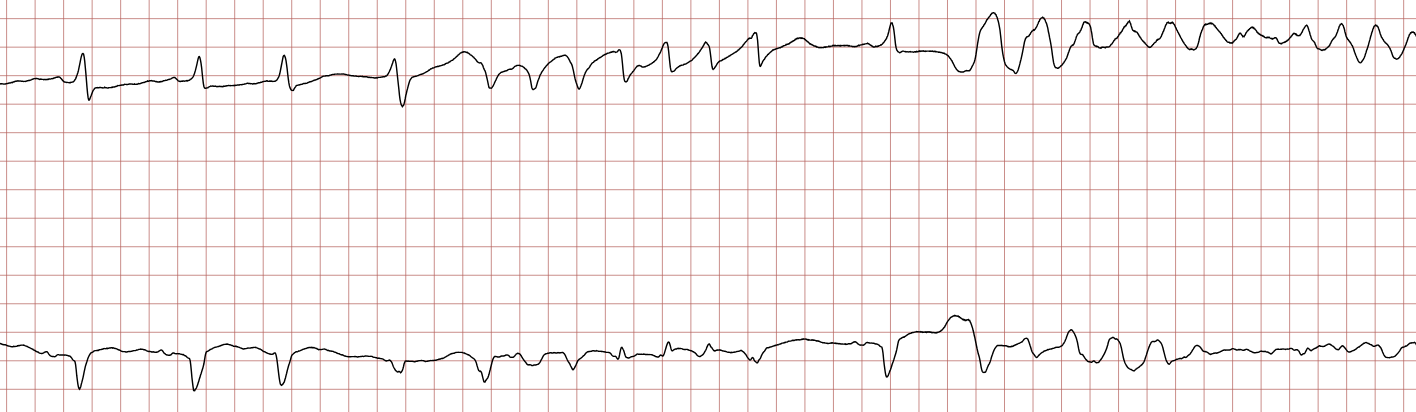
Sudden cardiac arrest: Case 1

Each recording presents two leads recorded simultaneously. Sex: Female Age: 72 years History: heart failure Medications: digoxin, quinidine

Sudden cardiac arrest and resuscitation

Sudden cardiac arrest: Case 2

Each recording presents two leads recorded simultaneously. Sex: Male Age: 43 years History: None Medications: None

Sudden cardiac arrest and resuscitation

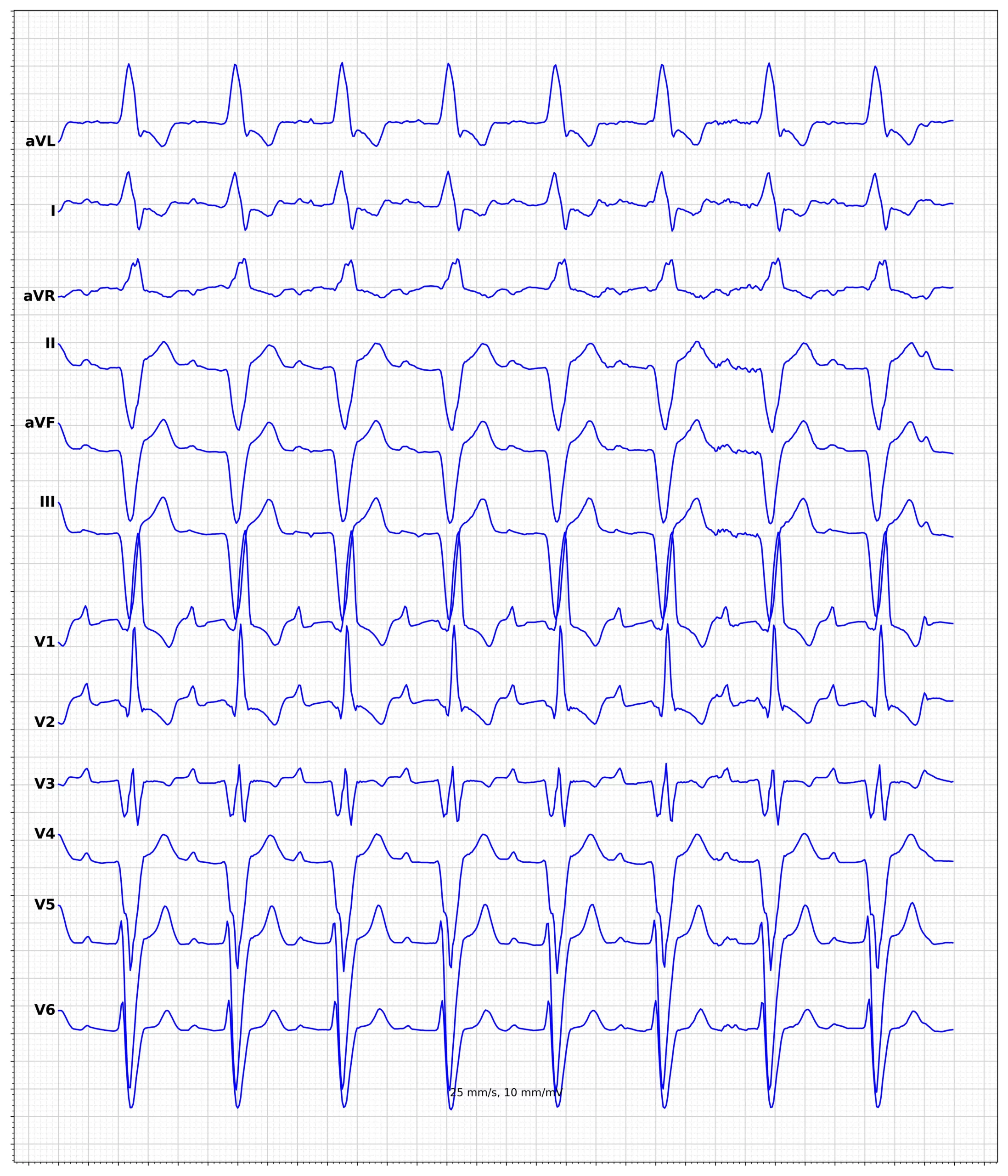
Sudden cardiac arrest: Case 3

Sex: Male Age: 62 years History: Coronary bypass grafting; history of arrhythmias. Medications: beta-blockers

Online medical education

Learn more.

We are dedicated to empowering clinicians with the most current, in-depth knowledge in cardiovascular medicine. Our platform offers a unique blend of expert insights, e-books, revision resources, and practical tools, designed to enhance your clinical practice and patient care. Join our community of dedicated healthcare professionals and elevate your practice evidence-based cardiovascular medicine.

Wiggers diagram showing pressure, volume, Doppler signal, ECG and AV valves during the cardiac cycle. Doppler recording of mitral valve flow during diastole. (a) = active atrial filling; (b) = increased atrial pressure due to bulging of mitral valve into the left atrium, when valve closes; (c) = passive atrial filling.